3. In the past
| Назад до p.37 ex.5 | p.38 ex.1 | Вперед до p.39 ex.2 |

Egypt – Єгипет
Egyptian – єгиптянин / єгиптянка; єгипетський
sand – пісок
blow – дути
Page 38 Activity 1. What do you know about the Singing Sand? Where do you think it gets its name from? / Що ти знаєш про Співучий пісок? Як ти думаєш, звідки він отримав свою назву?
Відповідь:
It gets its name from the sound the dry sand makes when the wind blows. It sounds like music.
– Він отримав свою назву через звук, який утворює сухий пісок, коли дме вітер. Цей звук схожий на музику.
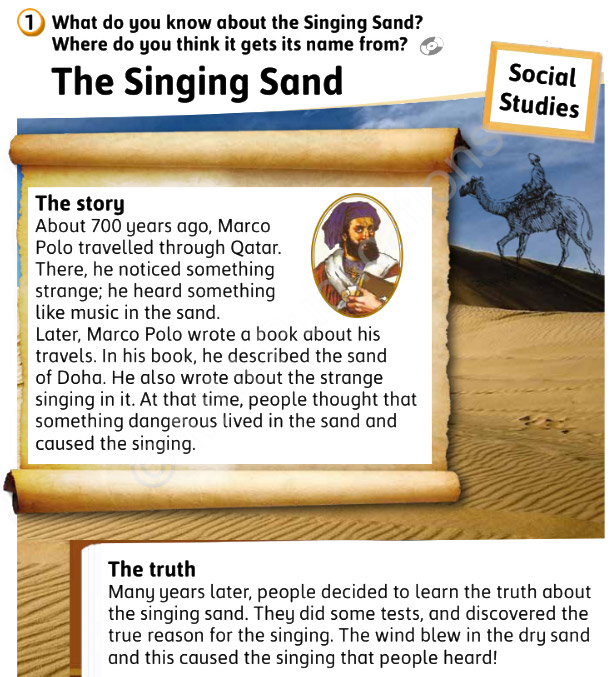
The Singing Sand
The story
About 700 years ago, Marco Polo travelled through Qatar. There, he noticed something strange; he heard something like music in the sand.
Later, Marco Polo wrote a book about his travels. In his book, he described the sand of Doha. He also wrote about the strange singing in it. At that time, people thought that something dangerous lived in the sand and caused the singing.
The truth
Many years later, people decided to learn the truth about the singing sand. They did some tests and discovered the true reason for the singing. The wind blew in the dry sand, and this caused the singing that people heard!
Співучий пісок
Історія
Близько 700 років тому Марко Поло подорожував Катаром. Там він помітив щось дивне: він почув у піску звук, схожий на музику.
Пізніше Марко Поло написав книгу про свої подорожі. У своїй книзі він описав пісок Дохи. Він також написав про дивний спів у ньому. У той час люди думали, що в піску живе щось небезпечне й спричиняє цей спів.
Правда
Через багато років люди вирішили дізнатися правду про співучий пісок. Вони провели кілька дослідів і з’ясували справжню причину співу. Вітер дув у сухий пісок, і це спричиняло звуки, які чули люди!